


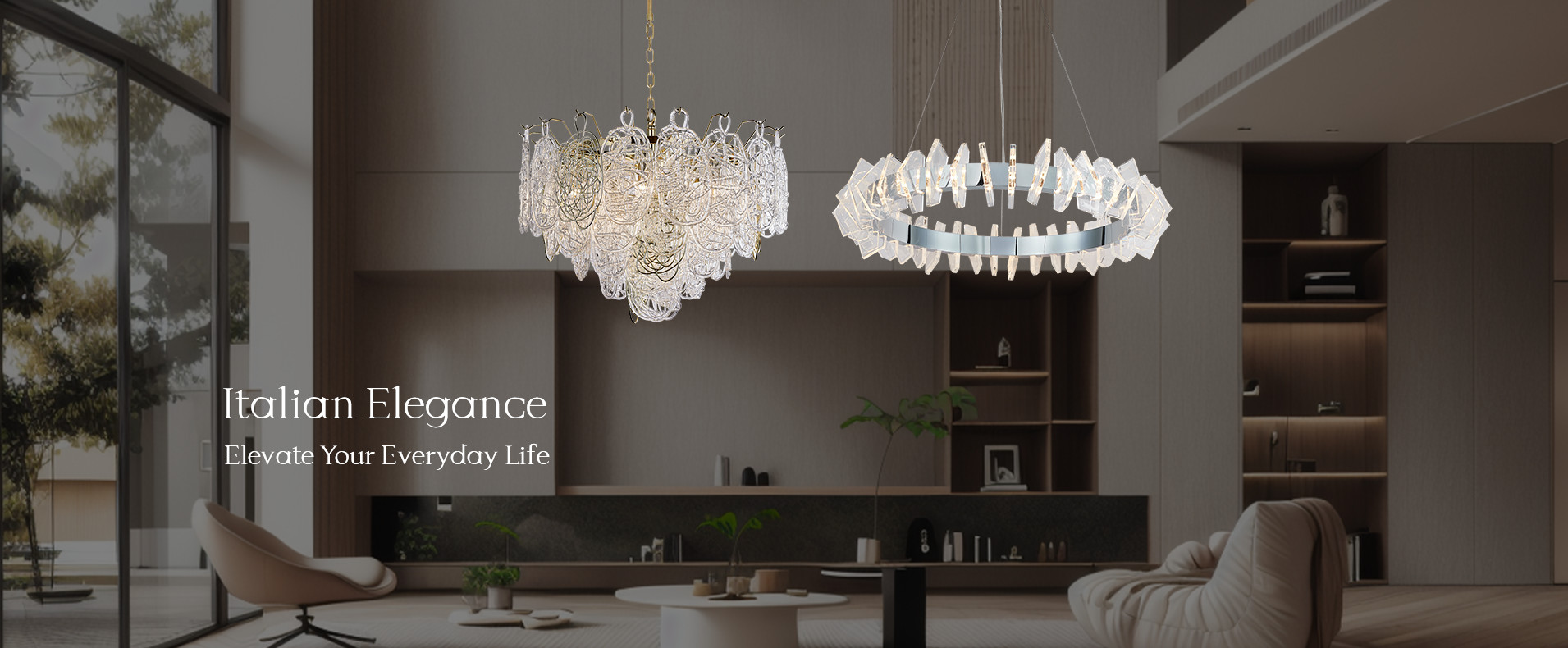
What Are the Differences Between Single-Light and Multi-Light Pendant Fixtures?
A single-light pendant uses one light source, while a multi-light pendant combines several light sources in one coordinated fixture. The main differences involve illumination coverage, visual impact, installation, maintenance, and application suitability.
1. What Is a Single-Light Pendant Fixture?
A single-light pendant is a ceiling-suspended lighting fixture designed around one light source. It typically features one shade or decorative structure connected to a ceiling canopy by a cord, chain, or rod.
Its straightforward structure makes it suitable for spaces that need focused illumination or a distinct decorative accent.
Common applications include:
Small dining tables and breakfast nooks
Kitchen counters and individual work areas
Entryways and compact living spaces
Reading corners and selected bedroom areas
Decorative lighting in boutique hospitality interiors
From a design perspective, a single-light pendant creates a clear focal point without introducing multiple visual elements. Its appearance can range from a simple contemporary shade to a decorative crystal or glass design.
For projects emphasizing refined materials and a clean ceiling layout, a single pendant can provide both functional lighting and a distinctive design detail.
2. What Is a Multi-Light Pendant Fixture?
A multi-light pendant fixture combines two or more light sources within one coordinated ceiling-mounted design. The individual lights may be arranged in a straight line, grouped at different heights, or distributed around a shared frame.
Unlike several independently installed pendants, a multi-light fixture is generally designed as one coordinated product with a shared mounting structure.
Common applications include:
Long dining tables and kitchen islands
Open-plan living and dining areas
Hotel reception spaces and lounge areas
Restaurant dining zones
High-ceiling entrances and stairwells
Multi-light pendants offer more opportunities to create visual rhythm, layered compositions, and wider illumination coverage. Depending on their structure, they can function as both a lighting solution and a prominent interior design feature.
For decorative lighting projects, the arrangement of each light point is as important as the number of light sources. Balanced spacing, coordinated finishes, and consistent proportions help the fixture look intentional rather than crowded.
3. What Are the Main Differences Between Single-Light and Multi-Light Pendants?
The primary difference is the number of light sources, but this also affects the fixture's appearance, lighting distribution, installation planning, and maintenance.
| Comparison Factor | Single-Light Pendant | Multi-Light Pendant |
|---|---|---|
| Light sources | One | Two or more |
| Fixture structure | One main light assembly | Multiple light points in one coordinated structure |
| Light distribution | Usually concentrated around one point | Can distribute light across a wider area |
| Visual appearance | Simple and understated | More layered and decorative |
| Suitable spaces | Compact areas and focused zones | Larger surfaces and feature areas |
| Installation | Usually simpler | Requires attention to wiring, weight, and layout |
| Maintenance | Fewer light sources to inspect | Multiple light sources and components to maintain |
| Design flexibility | Flexible through shade, material, and finish | Flexible through arrangement, suspension height, and composition |
One important distinction should guide purchasing decisions: more light sources do not automatically mean better illumination. Total light output, measured in lumens, depends on the specifications of the individual light sources. Shade materials, light direction, fixture geometry, and installation height also affect the result.
4. Which Pendant Fixture Provides Better Light Distribution?
A single-light pendant generally provides illumination from one central position. A multi-light pendant can distribute light across several positions, making it useful for longer or wider surfaces.
However, the number of light sources alone does not determine lighting quality.
Single-Light Pendant: Focused Illumination
A single-light pendant is often appropriate when the lighting target is relatively small or when a defined pool of light is preferred.
For example, a downward-facing shade can direct illumination toward a small dining table or countertop. A glass shade may allow light to pass through the sides, creating a softer visual effect.
The final result depends on:
Light source output and beam angle
Shade shape and opening size
Transparent, translucent, or opaque materials
Suspension height
The dimensions of the illuminated surface
Multi-Light Pendant: Wider Coverage
A multi-light pendant can distribute light across several points along a table, counter, or other large surface.
This configuration is particularly useful when a single central light source would leave parts of the surface insufficiently illuminated.
For example, a linear arrangement can follow the length of a rectangular dining table, while a staggered cluster can create visual depth in an entrance or open living area.
For project selection, EVAN Lighting recommends evaluating the illuminated surface rather than relying only on bulb count. Total lumens, light direction, spacing, and shade dimensions should be considered together.
5. Is a Multi-Light Pendant the Same as Installing Several Single Pendants?
No. Although the visual effects can be similar, their mounting structures and installation arrangements are different.
A multi-light pendant is generally manufactured as one coordinated fixture. Several individual pendants are separate products, each requiring its own mounting position and electrical connection.
| Feature | Multi-Light Pendant | Several Individual Pendants |
|---|---|---|
| Product structure | One coordinated fixture | Multiple independent fixtures |
| Ceiling mounting | Commonly one shared canopy | Usually separate mounting points |
| Electrical planning | Centralized fixture arrangement | Multiple connection locations |
| Positioning | Determined by the fixture design | Greater freedom to adjust each position |
| Visual consistency | Designed as one composition | Requires coordination between separate products |
| Installation planning | Check total fixture weight and mounting support | Coordinate each mounting point and spacing |
A multi-light fixture may be more practical when a project has one suitable ceiling connection and requires several coordinated light points.
Separate pendants may be preferable when the designer needs to control the exact position of each fixture or work with multiple existing ceiling outlets.
Before ordering, buyers should confirm the ceiling structure, electrical connection arrangement, mounting dimensions, and total fixture weight with the project team.
6. Which Pendant Fixture Is Better for Kitchen Islands and Dining Tables?
The best choice depends on the dimensions of the surface, the required illumination, and the desired interior effect.
A single-light pendant may be suitable when:
The island or table is relatively compact.
One decorative focal point is preferred.
The lighting requirement is concentrated in one area.
The ceiling layout favors a central fixture.
A multi-light pendant may be suitable when:
The table or island has a longer surface.
Illumination needs to reach several positions.
A coordinated linear or clustered design is required.
The fixture needs to create a stronger decorative presence.
For long rectangular surfaces, a linear multi-light arrangement can follow the furniture's proportions. For round tables, a single appropriately sized pendant may create a more balanced visual composition.
As an initial installation reference, pendant fixtures above dining tables and kitchen islands are often positioned approximately 30–36 inches above the surface. This is a starting point rather than a universal specification; ceiling height, fixture dimensions, sightlines, and manufacturer instructions should determine the final position.
7. What Should Buyers Check Before Purchasing Single-Light or Multi-Light Pendants?
For residential, hospitality, and commercial lighting projects, buyers should evaluate more than the fixture's appearance.
1. Overall Dimensions and Proportions
Check the fixture's diameter or length, height, suspension range, canopy dimensions, and clearance from surrounding furniture or architectural elements.
A multi-light fixture should be proportionate to the surface below it. An oversized design may overwhelm a compact room, while an undersized fixture may lack sufficient visual presence in a large space.
2. Total Light Output
Compare the total lumen output rather than assuming that a higher bulb count guarantees greater brightness.
Also consider light distribution, shade transparency, beam direction, and the lighting requirements of the intended space.
3. Materials and Finishes
Decorative materials influence both the fixture's appearance and the way light interacts with the surrounding interior.
Glass, metal, and crystal elements can produce different visual effects. EVAN Lighting focuses on Italian modern light-luxury lighting designs and high-end crystal lighting collections, providing design options for projects that require coordinated decorative details.
4. Electrical and Installation Specifications
Before confirming an order, buyers should verify:
Rated voltage and frequency
Compatible bulb base and maximum wattage, where applicable
Integrated LED or replaceable light-source configuration
Dimming compatibility, if required
Canopy and mounting dimensions
Total fixture weight and ceiling support requirements
Applicable electrical and safety requirements in the destination market
Specifications should be confirmed against the selected product and its technical documentation rather than assumed from the fixture category.
5. Manufacturing and Project Coordination
For bulk orders and hospitality projects, consistent appearance across multiple fixtures is important.
EVAN Lighting is a decorative lighting manufacturer based in Guzhen, Zhongshan, with product development, design, production, and sales capabilities. Its manufacturing facilities include independent mold, injection molding, die-casting, CNC, and finished-product workshops.
These manufacturing capabilities support coordination across product design and production. For project-based purchasing, buyers should confirm available finishes, dimensions, packaging requirements, production schedules, and order specifications before placing an order.
Explore the EVAN Lighting official website to learn more about its decorative lighting collections and manufacturing background.
8. Frequently Asked Questions
Does a multi-light pendant produce more light than a single-light pendant?
Not necessarily. A multi-light pendant may provide higher total lumen output, but this depends on the output of each light source. The fixture's design and light distribution also affect the actual illumination.
Are multi-light pendant fixtures harder to install?
They can require more installation planning because of their additional light points, wiring arrangement, and overall weight. However, many multi-light fixtures use one shared mounting structure. The manufacturer's installation instructions and local electrical requirements should always be followed.
Are single-light pendants better for small rooms?
They are often suitable for compact spaces because they create a simpler visual arrangement. However, the fixture's actual dimensions, light output, and suspension height still need to match the room.
Can multi-light pendants be used in hotels and restaurants?
Yes. Multi-light pendants can work well in hotel reception areas, restaurants, dining spaces, and other hospitality interiors. Their coordinated light points can provide decorative emphasis and distribute illumination across larger areas.
Is a multi-light pendant the same as a linear pendant?
Not always. A linear pendant describes an elongated fixture arrangement, while a multi-light pendant describes a fixture with multiple light sources. A linear pendant may contain several light sources, but not every multi-light pendant has a linear shape.
Conclusion: Which Pendant Fixture Should You Choose?
Choose a single-light pendant when the project requires focused illumination, a simple visual profile, or a compact decorative feature. Choose a multi-light pendant when several light points, broader coverage, or a more prominent decorative composition are needed.
For lighting buyers and project designers, the most reliable decision comes from matching the fixture's dimensions, total lumen output, light distribution, materials, and installation requirements to the actual space.
At EVAN Lighting, decorative design and manufacturing capabilities support the selection of lighting solutions for different interior styles and project requirements. The right configuration should balance practical illumination with the visual character of the finished space.