

What Should Buyers Consider When Choosing Crystal Chandeliers for Hotels?
Buyers should evaluate crystal chandeliers for hotels based on architectural scale, crystal quality, lighting performance, structural safety, maintenance access, and project requirements. The right fixture should enhance the hotel's identity while remaining practical for long-term operation.
Why Are Crystal Chandeliers Suitable for Hotel Interiors?
Crystal chandeliers combine decorative impact with functional lighting. Their reflective elements create visual highlights, add depth to interior spaces, and help establish a distinctive atmosphere.
In hotels, they are particularly suitable for:
Hotel lobbies: Create a memorable focal point in reception and arrival areas.
Ballrooms: Enhance the visual character of large event spaces.
Hotel restaurants: Complement dining furniture, interior finishes, and the desired atmosphere.
Staircases and atriums: Use vertical compositions to emphasize architectural height.
Luxury suites: Add decorative detail to selected living and dining areas.
However, a crystal chandelier should not be selected solely because it looks luxurious. Its dimensions, illumination, installation requirements, and maintenance needs must fit the actual environment.
A useful purchasing principle is to evaluate the chandelier as part of the hotel's overall lighting and interior system, rather than as an isolated decorative object.
How Should Buyers Choose the Right Chandelier Size for a Hotel?
Chandelier size should be determined by the room's volume, ceiling height, architectural features, and viewing distances.
A fixture that is too small may disappear in a large hotel lobby, while an oversized chandelier can overwhelm the interior or interfere with circulation and architectural details.
| Hotel Space | Main Sizing Considerations | Design Objective |
|---|---|---|
| Lobby and reception | Ceiling height, entrance width, viewing distance | Create a recognizable focal point |
| Ballroom | Room dimensions, ceiling structure, table layout | Achieve visual balance across a large space |
| Restaurant | Dining table arrangement, ceiling height, seating clearance | Complement the dining environment |
| Staircase | Vertical clearance, stair geometry, viewing angles | Emphasize architectural height |
| Guest suite | Room proportions, furniture layout, ceiling height | Maintain decorative balance without overwhelming the room |
For preliminary planning, some designers use a residential-style diameter estimate based on room length and width. However, this should not be treated as a universal hotel specification.
Large hospitality spaces require more careful evaluation of ceiling volume, chandelier height, sightlines, and the relationship between the fixture and surrounding architecture.
Practical recommendation: Confirm the chandelier's overall diameter, height, suspension length, and lowest hanging point against the reflected ceiling plan before approving production drawings.
What Types of Crystal Are Suitable for Hotel Chandeliers?
Crystal selection influences the chandelier's transparency, light reflections, visual character, and overall appearance.
Different crystal materials and manufacturing processes can produce noticeably different results.
| Crystal Type or Category | Visual Characteristics | Buyer Considerations |
|---|---|---|
| High-quality lead-free crystal | Can provide clear appearance and decorative brilliance | Review optical quality and material specifications |
| Lead crystal | Often associated with high refractive properties and traditional luxury designs | Confirm composition, applicable regulations, and handling requirements |
| K9 optical crystal | Commonly used in decorative lighting components | Compare clarity, cutting quality, and consistency |
| Glass crystal elements | Available in different shapes, finishes, and transparency levels | Check surface quality, weight, and batch consistency |
| Colored crystal | Adds distinctive color effects | Confirm color consistency under the intended lighting conditions |
The term "crystal" alone does not establish material quality. Buyers should request clear product specifications rather than relying only on marketing descriptions.
Important details include:
Material composition and grade.
Transparency and surface clarity.
Cutting precision and edge finishing.
Shape and dimensional consistency.
Attachment method and structural reliability.
Replacement availability for damaged components.
For hotel projects requiring a consistent luxury appearance, evaluating physical samples under the intended lighting conditions is particularly useful.
How Does Crystal Design Affect the Hotel's Interior Style?
The shape, density, arrangement, and finish of crystal elements influence how a chandelier relates to the surrounding interior.
Different designs are suited to different architectural concepts.
| Chandelier Design | Visual Character | Suitable Hotel Application |
|---|---|---|
| Tiered crystal chandelier | Formal and visually substantial | Traditional luxury lobbies and ballrooms |
| Cascading crystal chandelier | Vertical movement and layered reflections | Atriums, staircases, and high-ceiling spaces |
| Ring-shaped crystal chandelier | Geometric and contemporary | Modern reception areas and dining spaces |
| Branch-style crystal chandelier | Organic and decorative | Boutique hotels and design-led interiors |
| Minimalist crystal chandelier | Refined decorative detail | Contemporary hotel suites and lounges |
For example, a cascading crystal composition can emphasize the height of an atrium, while a geometric ring design may better complement a modern reception area.
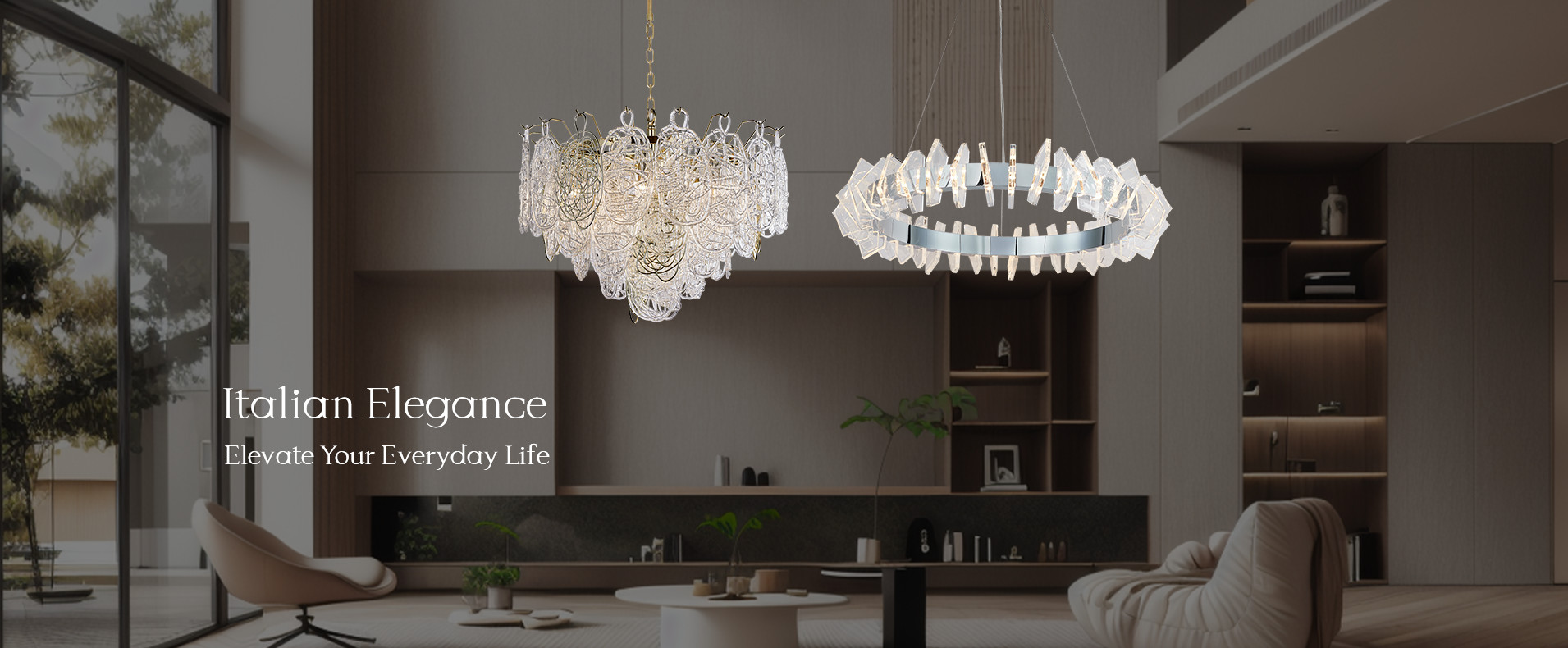
EVAN Lighting offers several decorative crystal chandelier styles within its Pendent Lamp Collection, including designs that combine crystal elements with metal structures.
Relevant product examples include:
These designs provide different visual directions for buyers comparing decorative styles and chandelier proportions.
What Lighting Performance Should Hotel Buyers Evaluate?
A crystal chandelier must contribute to the hotel's lighting plan, not simply produce decorative reflections.
Several technical characteristics should be reviewed before purchasing.
| Lighting Factor | What Buyers Should Check | Why It Matters |
|---|---|---|
| Lumen output | Complete fixture light output where available | Indicates available illumination |
| Light distribution | Direct, indirect, or combined distribution | Determines how light reaches the space |
| Color temperature | Specified Kelvin value | Influences the atmosphere of the interior |
| Color rendering | CRI information | Affects how accurately materials and furnishings appear |
| Glare control | Light-source visibility and shielding | Supports visual comfort |
| Dimming compatibility | Driver and control-system compatibility | Allows lighting scenes to be adjusted |
| Light-source maintenance | Replaceable bulbs or integrated LED components | Influences long-term servicing |
A chandelier with numerous crystal elements may create impressive sparkle but still provide insufficient general illumination for a large lobby.
For this reason, crystal chandeliers should normally be coordinated with other lighting layers, including recessed fixtures, wall lights, and architectural lighting.
The chandelier establishes the decorative focal point, while other fixtures provide the required ambient and functional illumination.
Color temperature and dimming requirements should also be confirmed with the project's lighting designer. A warm appearance may suit a luxury lobby, but the final specification should reflect the hotel's brand concept and operating needs.
How Important Are Structural Support and Installation Safety?
Structural support is one of the most important considerations when selecting large crystal chandeliers for hotels.
Crystal and metal components can create substantial fixture weight. The ceiling structure and suspension system must be suitable for the complete installed assembly.
Before ordering, buyers should confirm:
Total fixture weight: Include the frame, crystal elements, suspension components, and accessories.
Ceiling support: Confirm that the building structure can support the specified load.
Mounting method: Review ceiling plates, suspension points, and fixing details.
Installation clearance: Ensure that the chandelier does not obstruct circulation, doors, equipment, or architectural features.
Assembly requirements: Confirm whether the chandelier arrives assembled, partially assembled, or in multiple sections.
Local compliance: Verify applicable electrical, building, fire, and installation requirements in the destination market.
Large or complex installations should be reviewed by qualified structural and electrical professionals.
The manufacturer's technical drawings should be coordinated with the contractor's ceiling and electrical plans before installation begins.
How Can Hotels Reduce Crystal Chandelier Cleaning and Maintenance Costs?
Crystal chandeliers require regular maintenance to preserve their appearance and lighting performance.
Dust, fingerprints, environmental deposits, and other contaminants can reduce the visual clarity of crystal elements over time.
For hotels, maintenance should be considered during product selection rather than after installation.
Important considerations include:
Cleaning accessibility: Can maintenance staff reach the crystal elements safely?
Component arrangement: Are the crystals arranged in a way that allows practical cleaning?
Replacement components: Can individual damaged or missing elements be identified and replaced?
Light-source access: Can bulbs, drivers, or other serviceable components be reached without unnecessary disassembly?
Installation height: Does the location require specialist access equipment?
Maintenance documentation: Are cleaning instructions and product information available?
A highly detailed chandelier may create a stronger decorative effect, but it can also require more maintenance time.
For hotel operators, the best choice is not necessarily the chandelier with the greatest number of crystal elements. It is the design that delivers the required visual impact while remaining manageable throughout its service life.
What Should Buyers Check Before Ordering Crystal Chandeliers in Bulk?
Bulk purchasing requires a consistent specification process to reduce differences between individual fixtures and project batches.
Before confirming an order, buyers should review the following:
| Procurement Item | Details to Confirm |
|---|---|
| Product drawings | Overall dimensions, suspension length, and component arrangement |
| Material specifications | Crystal type, metal frame, finish, and decorative details |
| Lighting specifications | Light source, lumen output, color temperature, and dimming requirements |
| Electrical details | Voltage, frequency, wiring, and destination-market requirements |
| Structural information | Fixture weight, mounting points, and installation method |
| Quality inspection | Crystal clarity, finish consistency, assembly, and electrical checks |
| Packaging | Protection for fragile components and transportation requirements |
| Spare parts | Availability of replacement crystals and serviceable components |
| Production schedule | Sample approval, production lead time, and delivery milestones |
For projects with multiple chandeliers, a confirmed sample or approved reference fixture can help establish a consistent standard for subsequent production.
Buyers should also request packaging details and handling instructions. Crystal components are fragile, and unsuitable packaging can increase the risk of damage during international transportation.
Why Does Manufacturer Capability Matter When Sourcing Hotel Crystal Chandeliers?
Choosing a suitable manufacturer is important because hotel chandelier projects involve more than selecting a finished product.
Product design, material coordination, manufacturing processes, assembly, quality inspection, and delivery preparation all influence the final result.
EVAN Lighting is a decorative lighting manufacturer based in Guzhen, Zhongshan, China. The company focuses on Italian modern light luxury lighting fixtures and high-end crystal lighting.
Its approximately 12,000-square-meter production and exhibition facility brings together manufacturing processes including independent mold development, injection molding, die-casting, CNC processing, and finished-product production.
These capabilities provide a manufacturing foundation for decorative lighting development and coordination across different product categories.
For hotel buyers, several points are worth discussing with the manufacturer before placing an order:
Whether the selected chandelier design suits the project's architectural dimensions.
Whether material and finish specifications can be clearly confirmed.
Whether technical drawings and product details can be reviewed before production.
Whether production inspection and packaging requirements can be agreed in advance.
Whether related decorative lighting categories can maintain a coordinated design language.
EVAN's product range includes chandeliers, ceiling lamps, wall lamps, table lamps, and floor lamps. This broader product portfolio gives buyers a starting point for coordinating decorative lighting styles across different hotel spaces.
A well-defined specification and clear communication between the buyer, designer, manufacturer, and installation team help reduce avoidable changes during project execution.
Frequently Asked Questions
What type of crystal chandelier is best for a hotel lobby?
Tiered, cascading, and large geometric crystal chandeliers are common options for hotel lobbies. The best design depends on ceiling height, architectural style, viewing distance, and the intended visual impact.
Are crystal chandeliers suitable for hotel ballrooms?
Yes. Crystal chandeliers can enhance the decorative character of ballrooms and banquet spaces. Their size, suspension method, structural support, lighting output, and maintenance access must be planned according to the venue.
What should buyers check about crystal quality?
Buyers should review material specifications, clarity, cutting precision, surface finish, dimensional consistency, and attachment methods. Physical samples can help assess the actual appearance before bulk approval.
Do hotel crystal chandeliers need dimming?
Not every chandelier requires dimming, but compatible dimming can provide greater flexibility in spaces used for different activities. Buyers should confirm that the light source, driver, and control system work together.
How can hotels maintain crystal chandeliers?
Regular cleaning, suitable maintenance access, and replacement-part planning help preserve the fixture's appearance. Cleaning procedures should follow the manufacturer's instructions and account for the chandelier's materials and installation height.
Should hotel buyers request technical drawings before ordering?
Yes. Technical drawings help confirm dimensions, suspension length, mounting details, electrical requirements, and installation clearances. They should be reviewed before production approval.
Conclusion: What Makes a Crystal Chandelier the Right Choice for a Hotel?
The right hotel crystal chandelier balances architectural scale, crystal quality, lighting performance, structural safety, maintenance requirements, and procurement needs.
For buyers, the most effective approach is to confirm the design and technical specifications together before production begins. A chandelier should create a memorable visual impression while remaining safe, serviceable, and consistent with the hotel's overall lighting concept.
By evaluating both decorative value and long-term operating requirements, hotel owners, designers, and procurement teams can make more informed decisions when sourcing crystal chandeliers for hospitality projects.