

How Many Pendant Lights Should Be Installed Over a Kitchen Island?
Most kitchen islands look balanced with two or three pendant lights. Smaller islands may need one large fixture or two compact pendants, while longer islands can accommodate three or four, depending on fixture width, spacing, and lighting requirements.
1. How Many Pendant Lights Do You Need for Different Kitchen Island Sizes?
The length of the island provides a useful starting point, but pendant diameter and visual weight determine how many fixtures can fit comfortably.
| Kitchen island length | Suggested pendant arrangement | Design considerations |
|---|---|---|
| 4–5 feet (1.2–1.5 m) | One large pendant or two small pendants | Avoid overcrowding a compact countertop |
| 6 feet (1.8 m) | Two medium pendants | Maintain balanced spacing and end clearance |
| 7–8 feet (2.1–2.4 m) | Two large or three compact pendants | Match fixture width to the available surface |
| 9–10 feet (2.7–3 m) | Three medium pendants | A centered arrangement usually creates a balanced visual rhythm |
| More than 10 feet (3 m) | Three or four pendants, or a linear fixture | Consider the island's full length and lighting coverage |
These are planning guidelines rather than fixed rules. A pair of wide decorative pendants may provide a better visual result than three oversized fixtures. Conversely, three slim pendants can create a more even arrangement over a long island.
2. Should You Install Two or Three Pendant Lights Over a Kitchen Island?
The choice between two and three pendants depends on the island's proportions and the appearance of the selected fixtures.
When Are Two Pendant Lights Better?
Two pendants are often suitable for:
Compact and medium-sized islands.
Large fixtures with substantial shades or decorative details.
Kitchens with a minimalist or symmetrical design.
Islands where a clear central sightline is important.
Two larger fixtures can create a balanced arrangement without making the ceiling look crowded.
When Are Three Pendant Lights Better?
Three pendants are often suitable for:
Longer kitchen islands.
Narrow or compact pendant designs.
Kitchens that need more evenly distributed decorative lighting.
Interiors where a repeated visual rhythm is desired.
An odd number of fixtures often creates a natural focal point, particularly when one pendant is centered over the island.
However, the rule of three should not override fixture proportions. Three oversized pendants can look crowded, while two carefully selected fixtures may produce a more refined result.
3. How Does Pendant Light Size Affect the Number of Fixtures?
Pendant size is one of the most important factors when determining fixture quantity.
A common mistake is choosing the number of lights based only on island length. The widest part of each shade, rather than the ceiling canopy, determines how much visual and physical space the fixture occupies.
Consider three general size categories:
| Pendant size | Suitable arrangement | Main consideration |
|---|---|---|
| Small pendants | Two or three, sometimes four on longer islands | Avoid excessive gaps between fixtures |
| Medium pendants | Usually two or three | Balance shade width with the island length |
| Large pendants | Usually one or two | Preserve enough clearance between fixtures and island edges |
For example, two wide crystal pendants may create sufficient decorative presence over a medium island. Three smaller metal or glass pendants may be more appropriate when a lighter, repeated design is preferred.
The overall visual weight also matters. Crystal elements, layered shades, and elaborate metal structures can make a fixture appear larger than its measured diameter.
4. How Far Apart Should Pendant Lights Be Placed Over a Kitchen Island?
For many medium-sized pendants, approximately 24–30 inches (61–76 cm) between fixture centers is a useful starting point. The actual distance should account for shade diameter and the available countertop length.
A balanced layout should include:
Equal or visually consistent spacing between adjacent pendants.
Similar clearance at both ends of the island.
Enough room between the widest parts of the shades.
Alignment with the island's centerline.
For two pendants, position them symmetrically around the island's center. For three pendants, place one near the center and distribute the other two evenly on either side.
A practical way to plan the arrangement is to mark the fixture centers on the ceiling or a scaled drawing before electrical installation begins.
A useful design insight: Equal center-to-center measurements do not always produce equal visual gaps. If two fixtures have different widths or shapes, the distance between their outer edges may look uneven. For decorative installations, evaluate both the center positions and the actual shade boundaries.
5. Should Kitchen Island Pendant Lights Be Installed in Odd or Even Numbers?
Both odd and even arrangements can work.
Odd-Number Arrangements
Three pendants are frequently used over longer islands because a central fixture creates a clear focal point. Five smaller fixtures may be considered for unusually long surfaces, provided the spacing and lighting output remain appropriate.
Even-Number Arrangements
Two or four pendants can create a symmetrical arrangement, especially when the fixtures are larger or the island is divided into functional zones.
The decision should be based on the island's dimensions, fixture design, and overall kitchen composition rather than a universal preference for odd numbers.
6. Can One Large Pendant Replace Two or Three Smaller Fixtures?
Yes. A single large pendant can be an effective choice for a compact island or a kitchen where a statement fixture is preferred.
It can work particularly well when:
The island is relatively short.
The pendant has sufficient light output for the intended task.
The fixture is proportionate to the countertop.
The design benefits from one strong visual focal point.
However, one central fixture may not distribute light evenly across a long island. Additional task lighting or supplementary ceiling lighting may be needed.
For longer islands, two or three separate pendants can provide more flexible placement and help distribute light along the work surface.
A linear pendant is another option. It combines multiple light sources or a continuous lighting structure into one elongated fixture, reducing the need to coordinate several individual ceiling drops.
7. How Should Pendant Quantity Change for Different Kitchen Island Functions?
The intended use of the island should influence the lighting arrangement.
| Island function | Lighting approach | Pendant arrangement |
|---|---|---|
| Food preparation | Prioritize useful task illumination and controlled shadows | Two or three fixtures depending on surface length |
| Casual dining | Combine comfortable light with visual balance | One statement pendant or two to three decorative pendants |
| Kitchen entertainment | Create an attractive focal point while maintaining comfortable brightness | Two or three coordinated decorative fixtures |
| Large multifunctional island | Consider coverage across different working and seating zones | Three or more fixtures or a linear lighting solution |
The number of decorative pendants should not be treated as the only source of illumination. Under-cabinet lighting, recessed fixtures, and other ambient lighting may be necessary to provide a complete kitchen lighting scheme.
8. What Other Measurements Should Be Checked Before Installing Multiple Pendants?
Once the fixture count has been selected, the layout should be checked against several installation details.
Pendant Height
A common starting point is to position the bottom of the pendant approximately 30–36 inches (76–91 cm) above the countertop. Adjust this according to ceiling height, fixture dimensions, sightlines, and the people using the kitchen.
End Clearance
Avoid placing the outer fixtures directly above the ends of the island. A starting clearance of approximately 6–12 inches (15–30 cm) from the island ends to the nearest fixture edge can help prevent a crowded appearance.
Electrical Outlet and Ceiling Layout
Before finalizing the number of fixtures, confirm:
Ceiling junction-box positions.
Available wiring and switching arrangements.
Suspension length and adjustment options.
Ceiling structure and mounting requirements.
Whether the fixtures require individual or shared controls.
These details should be resolved before ceiling work and electrical rough-in are completed.
9. What Pendant Light Styles Work Well Over Kitchen Islands?
The fixture style should complement the kitchen's materials, cabinetry, countertop, and overall interior design.
Crystal Pendant Lights
Crystal pendants create decorative reflections and can add a more luxurious appearance. They are suitable for kitchens where the island is intended to serve as a visual focal point.
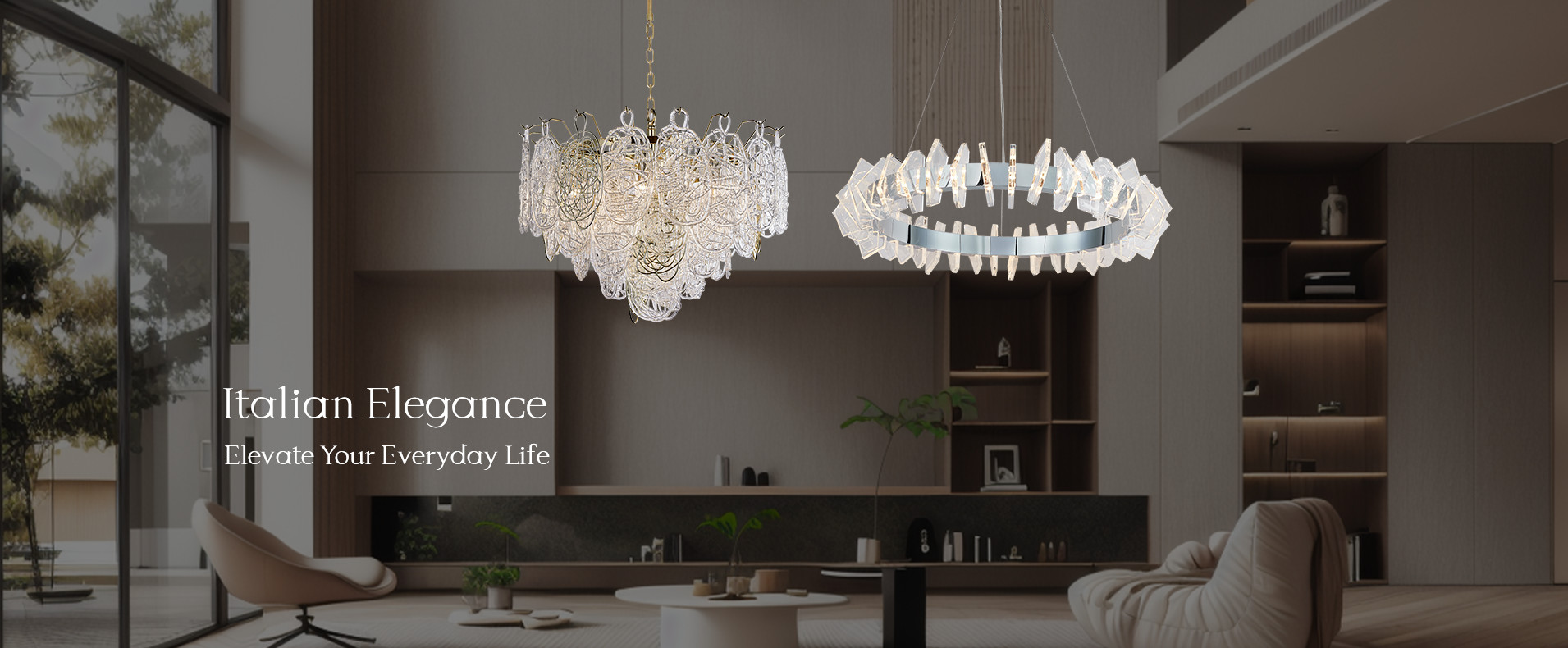
EVAN Lighting's Vintage Italian Crystal Pendant Lamp combines descending crystal elements with a decorative design, making it an option to consider for interiors that use crystal accents.
Metal-Frame Pendant Lights
Metal structures can create a defined silhouette and coordinate with cabinet hardware, faucets, and other metallic details.
The Modern Lace Pattern Pendant Light features an intricate metal-frame design that creates decorative light and shadow effects.
Italian Decorative Pendant Designs
For kitchens with a more refined interior style, Italian-inspired decorative lighting can help connect the island with the wider design scheme.
Explore the EVAN Lighting Pendent Lamp Collection to compare different decorative fixture styles.
10. What Should Buyers Consider When Sourcing Multiple Pendant Lights for a Kitchen Project?
For importers, distributors, designers, and project contractors, selecting the right number of pendants is only one part of the purchasing process.
When ordering multiple fixtures, buyers should confirm:
| Purchasing factor | What to verify |
|---|---|
| Fixture dimensions | Shade diameter, overall height, and suspension length |
| Finish consistency | Matching color and surface appearance across units |
| Material specifications | Metal, crystal, glass, and other decorative components |
| Electrical configuration | Voltage, frequency, socket, and light-source requirements |
| Installation details | Canopy dimensions, mounting method, and wiring arrangement |
| Packaging | Individual protection for fragile components |
| Production consistency | Approved sample and batch inspection requirements |
| Order coordination | Quantity, lead time, spare parts, and replacement arrangements |
EVAN Lighting is a high-end decorative lighting manufacturer based in Guzhen, Zhongshan, China. The company focuses on Italian modern light luxury lighting fixtures and high-end crystal lighting collections.
Its approximately 12,000-square-meter production and exhibition facilities support product development and manufacturing. The company's production processes include independent mold development, injection molding, die-casting, CNC processing, and finished-product production.
For multi-fixture projects, these manufacturing processes provide a foundation for coordinating product structures and decorative components. Buyers should confirm model-specific dimensions, finishes, electrical specifications, and production details before approving an order.
Frequently Asked Questions
Is two or three pendant lights better over a kitchen island?
Both arrangements can work. Two larger pendants often suit medium-sized islands, while three smaller or medium-sized fixtures can create a balanced layout over longer islands.
How many pendant lights are needed for a 6-foot kitchen island?
Two medium-sized pendants are a practical starting point. One large statement pendant may also work if its dimensions and light output are suitable.
How many pendant lights are needed for an 8-foot kitchen island?
Three compact or medium-sized pendants are a common arrangement. Two larger fixtures may also work when their width and visual weight are appropriate.
Can four pendant lights be installed over a kitchen island?
Yes. Four pendants can suit longer islands, particularly when the fixtures are relatively small. Their spacing, shade width, and overall visual balance should be checked before installation.
Should pendant lights be centered over a kitchen island?
Generally, yes. The arrangement should align with the island's centerline and be distributed evenly along its length, while allowing for end clearance and the intended seating or work zones.
Can a linear pendant replace multiple individual pendants?
Yes. A linear fixture can provide a continuous visual arrangement over a longer island. Its length, light output, and proportions should be matched to the countertop.
Conclusion
Most kitchen islands work well with two or three pendant lights, but the correct number depends on island length, fixture dimensions, spacing, and lighting requirements. By planning the complete arrangement before electrical installation, homeowners and project buyers can achieve a balanced appearance and more useful illumination.